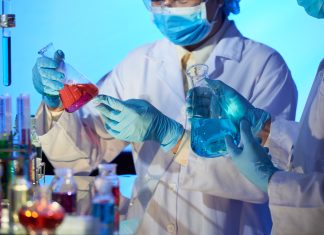

Russia will create a human-on-a-chip drug screening system that allows drugs to be tested without animal tests and before human trials, TASS reports. The model is included in the program for the development of genetic technologies for the coming years. It is believed that with the help of a human-on-a-chip it is possible to quickly and efficiently test biological and chemical substances in order to identify the most promising ones for drug development.
The chip is a special device that simulates the function of human organs. The chip contains networks of very fine microchannels for nutrients, and living cells are grown on the surfaces. The models provides a more physiologically relevant environment because they allow for a more accurate assessment of a substance’s effects on a specific organ or on the whole body.
Russia already has developments based on this technology. During the summer, researchers at the Research Institute of Pulmonology of the FMBA of Russia developed a lung-on-a-chip to study the effects of the extreme Arctic climate. Similar systems have also been created for the liver, kidneys, intestines, and even the brain, as previously reported by GxP News.
In the spring of this year, the US Food and Drug Administration (FDA) announced that it plans to phase out animal testing in favor of artificial intelligence-based models in the development of some drugs. In 2023, then-President Joe Biden signed a law that permitted drugmakers to use alternative methods—such as computer modeling and organs-on-a-chip—for FDA approval, reducing reliance on animal testing