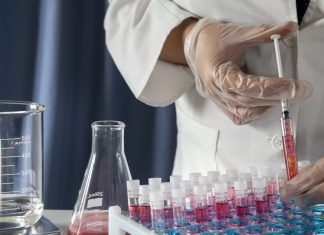

Scientists from St. Petersburg have outlined the potential of artificial intelligence (AI) to solve cross-industry tasks, including drug development, at a press conference at the Rossiya Segodnya press centre dedicated to the Priority-2030 program. Launched in 2021, Priority-2030 is the largest state program for university support in Russia, encompassing 141 institutions.
“We are creating a digital platform for analysing multimodal data to generate predictive and prescriptive analytics—that is, to forecast what will happen and explain why,” said Yuri Fomin, Vice-Rector for Research at Peter the Great St. Petersburg Polytechnic University (SPbPU). He stated that the system is a “constructor” of solutions capable of adapting to various sectors, from industry to medicine.
“It was fundamentally important to bring together various methods on a single platform, test their performance on specific tasks, confirm that we can solve these tasks with sufficient accuracy, and offer the tools to the client as a unified product,” he explained. One such task involves using AI to speed up the search and optimization of biologically active substances that could form the basis for new drugs to treat malignant neoplasms.
Aleksandr Timin, Head of the Laboratory for Nano- and Microencapsulation of Biologically Active Subtances at SPbPU, noted that their AI-based platform technology allows for the selection of the most promising chemical structures for subsequent synthesis and pre-clinical testing. “We have formed a database of over 100,000 chemical structures of biologically active substances based on aminothiophenes and selected the most promising ones for synthesis in our chemical laboratory. While traditional methods require years, using a pre-trained neural network yields the same result in just a few days,” he explained.
AI is increasingly transitioning from an experimental technology to a routine tool. GxP News has analysed how Big Pharma is using artificial intelligence.