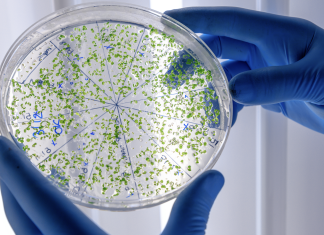

The Advanced Engineering School of the Far Eastern Federal University (FEFU) is developing a treatment for Crohn’s disease based on enzymes from marine microorganisms, according to Lyudmila Tekutyeva, the School’s director.
“A molecule discovered earlier and enzymes synthesized based on it through biotechnological means have shown potential effectiveness in several areas. Currently, we are working on creating a treatment for Crohn’s disease—a serious, rare, and difficult-to-treat illness,” she told TASS. According to Tekutyeva, preclinical trials of the enzyme-based drug are now underway.
Crohn’s disease is a chronic inflammatory bowel disease causing immune system-driven inflammation anywhere in the digestive tract, from the mouth to the anus, but most often in the ileum. Symptoms include abdominal pain, diarrhea, weight loss, fatigue, and fever. There is currently no cure for Crohn’s disease, but therapies focus on reducing inflammation and preventing complications.
Biocad is also developing a drug for Crohn’s disease. According to the company’s website, patients are currently being recruited for Phase II of a “randomized double-blind placebo-controlled study of the efficacy, safety, pharmacokinetics, pharmacodynamics, and immunogenicity of the drug BCD-261 in patients with active moderate to severe Crohn’s disease.” BCD-261 is an original human antibody targeting TL1A (Tumor necrosis factor-like cytokine 1A). Eligible patients are those 18-75 for whom prior therapies—glucocorticoids, immunosuppressants, or biologics—have proven ineffective. The study will take place in 33 hospitals across 17 Russian cities.