




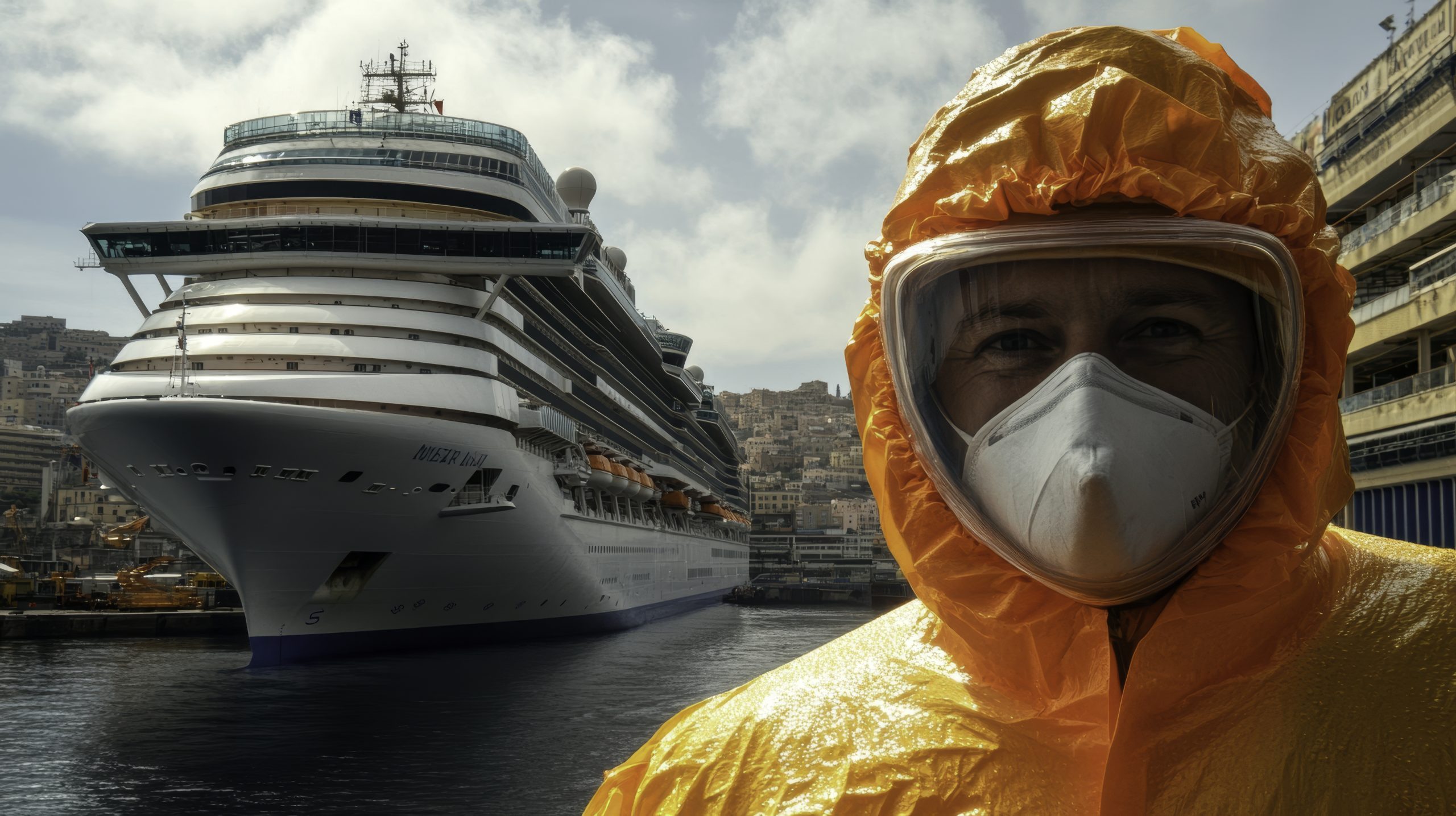
The hantavirus outbreak that brought back painful memories of the COVID‑19 pandemic appears to be ending without spreading beyond the cruise ship where it began.
The long incubation period of nearly three weeks gives health authorities time to isolate the infected and trace contacts, but it also means it is still too early to know whether passengers who left the ship have passed the virus on. The loser in the episode is the tourism industry – cruise ships are ideal breeding grounds for disease. The short-term winner, however, is Moderna. The company’s announcement that it is working on a hantavirus vaccine diverted investor attention from its otherwise lackluster earnings report.
The hantavirus outbreak occurred on the cruise ship MV Hondius. The voyage began on April 1 in Ushuaia, southern Argentina. Local officials believe “patient zero” – Leo Schilperoord, a 70-year-old Dutch ornithologist – may have been infected in Ushuaia while visiting a landfill during an excursion. Another theory is that he was infected before the cruise. He then passed the virus to his 69-year-old wife. Both were initially asymptomatic, confined to the ship. The couple later died, but not before spreading the infection further. By early May, seven cases of hantavirus had been confirmed on board, with at least three deaths.
Hantaviruses are transmitted through rodent faeces, urine and saliva. About 40 hantaviruses have been identified, including the Andes strain that infected the MV Hondius passengers – the only known strain that spreads from human to human. New World hantaviruses found in the Americas have a fatality rate of up to 50%. In Europe and Asia, they are less deadly, killing between 1% and 15% of those infected. Infection can cause outcomes ranging from very mild illness to one of two severe diseases: hantavirus pulmonary syndrome (HPS), where acute respiratory failure causes fluid to fill the lungs, or haemorrhagic fever with renal syndrome (HFRS), which leads to acute kidney failure and internal bleeding, said Jonathan Ball, professor of molecular virology at the Liverpool School of Tropical Medicine.
On May 10, the MV Hondius anchored off the coast of Tenerife. Its 147 passengers underwent medical checks and then travelled back to their home countries. The first to disembark were the Spanish passengers, who were placed in a hospital with no visitor access and given two PCR tests a week apart. An inspection of the ship found no rodents – the usual source of hantavirus transmission to humans. The ship’s arrival triggered protests from local residents, but World Health Organization (WHO) officials assured the public that no epidemic would follow.
Authorities in the countries receiving returning passengers are taking precautions. All passengers are examined upon arrival and, in most cases, placed in self‑isolation for several weeks. Some researchers are calling for stricter quarantine measures, citing evidence that human‑to‑human transmission does not necessarily require prolonged or close contact, contrary to earlier assumptions.
The outbreak is serious and requires active measures, but it does not threaten to become a pandemic, the Financial Times reported. The difference from COVID‑19 is significant. SARS‑CoV‑2 spread rapidly from person to person because its incubation period was just a few days. The Andes hantavirus has a much longer incubation period – nearly three weeks – which slows transmission, Professor Ball explained. “Because human‑to‑human transmission is limited and relatively easy to contain, there is a considerable amount of time between one person becoming infected and passing the virus on to others. That means there is ample time for isolation and contact tracing, which can bring an outbreak under control very quickly. So we are dealing with completely different phenomena,” Ball added, comparing hantavirus and COVID‑19.
However, the outbreak has highlighted a potentially dangerous problem linked to one of the fastest‑growing segments of the tourism industry – expedition cruises, Bloomberg reported. From an epidemiologist’s perspective, a cruise ship is an ideal breeding ground for diseases, especially unusual ones. People from different countries gather on board; someone may bring a disease with a long incubation period. The outbreak may only become apparent somewhere in the middle of the voyage, when the ship is far from medical facilities and has already visited several regions. By then, it may be too late to contain the infection.
Moreover, visiting unusual or remote places untouched by mass tourism – exactly what expedition cruises offer – is a fast‑growing segment of the travel market. This is risky: when visiting, say, remote islands with wildlife, travellers come into contact with wild animals and their pathogens.
American physician and scientist Steven Quay said that May 19 could be a decisive date for determining whether hantavirus has spread beyond the MV Hondius. He calculated that in all second‑generation cases – where symptoms developed after contact with patient zero Leo Schilperoord – the illness began on average 22 days later.
Quay suggested that third‑generation cases – infections transmitted by passengers from the ship – would begin to appear around May 19 if the roughly three‑week incubation period remained constant.
Vaccines and treatments for hantavirus already exist but have not yet been tested in humans due to lack of funding and the infection’s low priority compared with other viruses, the Wall Street Journal reported. For example, an international consortium of researchers, biotech companies and a US military research institute has produced hantavirus antibodies. Moderna is also developing a vaccine, though the process is still at an early stage.
Moderna has emerged as a beneficiary of the situation. Interest in the company has surged, Barron’s noted. Since the start of May, Moderna’s shares on the Nasdaq have risen nearly 17%, despite a lackluster quarterly earnings report. However, the extra investor attention looks speculative for now – Moderna’s future depends more on its success in cancer drugs.