




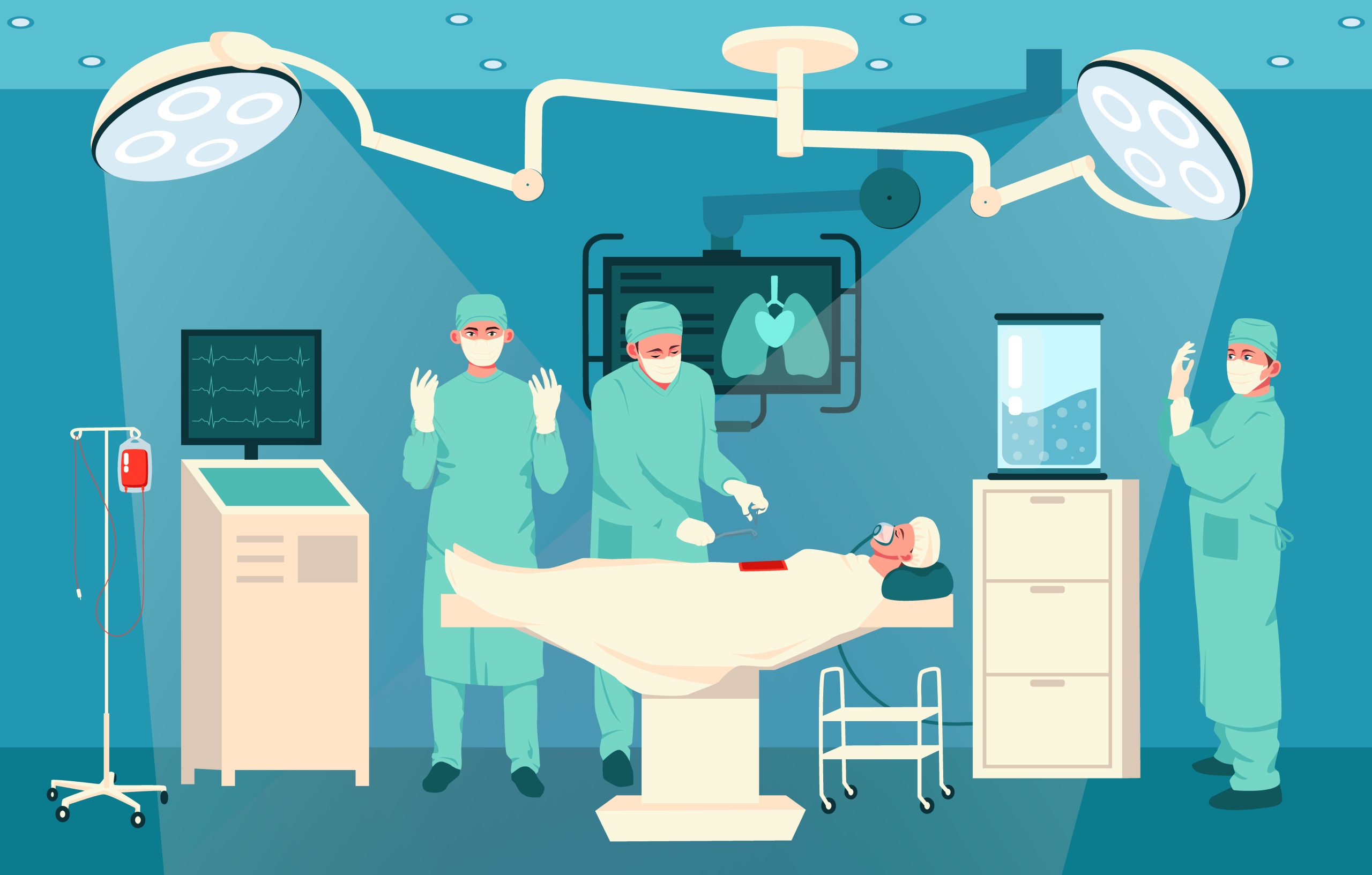
According to experts, the number of thoracic surgeons in Russia is declining, even as lung cancer continues to claim thousands of lives each year. Young surgeons observe operations from behind their mentors’ shoulders but enter independent practice with insufficient hands‑on experience. Ekaterina Kyzylova, a thoracic surgeon and head of student and resident training at the simulation centre of the St Petersburg Research Institute of Phthisiopulmonology, spoke about how the training system is structured and what competencies surgeons acquire in drug therapy.
The simulation centre at the St Petersburg Research Institute of Phthisiopulmonology was created primarily for patient safety – so that students could practise real surgical techniques on biological materials before moving into clinical practice.
The mastery of surgery is the number of repetitions
There are topics that have long been discussed within the professional community but are rarely voiced in public. One of them is the preparation of young surgeons for operations and their actual manual skills, Kyzylova writes.
In medical universities, students gain practical skills during clinical rotations, summer practice and assisting in surgeries, with two weeks of internship as a hospital physician’s assistant. But the mastery of surgery is the number of repetitions – there is no other secret. Ten days of a rotation, a few hours of observation from behind a mentor’s shoulder – this is not enough repetition to build a skill. It is only the beginning of the professional count.
What cannot be seen must be felt
Surgical skills can be divided into basic and specialised. Basic skills include tying knots, gaining surgical access, suturing wounds, creating various anastomoses, working with tissues and dissecting structures. Specialised skills in thoracic surgery include anatomical resections with removal of lung lobes, bronchoplastic and angioplastic operations.
Training on traditional simulators does not provide the most important thing – feedback. On silicone and 3D models, the student sees a picture on the screen that looks as smooth as in a video game. But at that moment, the tissue cannot be felt; one cannot understand how it separates under the instrument, how the needle turns, or at what point a movement becomes incorrect. Biological material provides exactly this opportunity – to build manual memory, the ability to automatically reproduce learned skills. And during a real operation, you reproduce a clear algorithm of actions that helps you avoid mistakes.
Speed, aesthetics and adherence to technique
At the simulation centre, students work primarily with bio‑organ complexes: the anatomy differs from human anatomy, but the tissues are similar, the dissection planes coincide, and on this material one can practise a full operation – from incision to wound closure.
Training is structured in stages, but skills are acquired in parallel. The student starts with the basics, then moves on to individual stages of operations – vascular anastomosis, interbronchial suturing. Only then do they proceed to a full operation on an organ complex. At the same time, they can go to the clinic and assist with simple interventions, gradually increasing the level of difficulty.
Learning outcomes are assessed from a practical standpoint. The student places a vascular anastomosis – then takes a syringe, applies saline under pressure and checks whether the suture holds. They suture a bronchus – then submerge the organ complex in water, introduce air through an Ambu bag and test for leaks. Speed, aesthetics and adherence to technique are assessed. These are the criteria for skill mastery – not the teacher’s subjective impression, but measurable results.
Drug therapy as part of surgery
Surgery does not end with wound closure. Alongside manual training, students discuss the drug support of the thoracic patient, Kyzylova writes. How to structure stepwise analgesia – from non‑narcotic analgesics to narcotics, understanding when to move from one step to the next, and how to assess the adequacy of pain relief. Venous thromboembolic prophylaxis is covered: which anticoagulant groups are indicated, when and why. Gastroprotection is studied – protecting the gastric mucosa against the background of analgesic therapy.
A separate block covers inhaled drugs that dilate the bronchi and improve sputum expectoration after surgery; without these, the risks of postoperative complications rise sharply. Clinical thinking is formed precisely here – when the student understands not only how to operate but also what will happen to the patient the next day after surgery.
Does the healthcare system need it?
The number of thoracic surgeons is declining, while the number of patients needing their help is growing every year, Kyzylova notes.
Simulation training solves several tasks at once. First, safety: the surgeon comes to a live patient with already formed skills, rather than practising technique on them. Second, readiness for emergencies: when the algorithm is recorded in the subconscious through repeated practice, the hands do their job, saving precious seconds for the right decision. Third, career guidance: better to understand in the training operating room that surgery is not for you than to realize it in the first year of residency.
In small towns, a student learns quickly – responsibility falls on their shoulders immediately, but feedback is often lacking. In large cities, the picture is different: there are many ambitious surgeons and an equally large number of trainees – so the concentration of practical skill per student is minimal. The simulation centre levels out this imbalance, giving anyone who wants it as many repetitions as they need to gain confidence.
Medical students who wish to practise at the simulation centre can contact the head of their university’s surgical student scientific society or go directly through their department, Kyzylova concludes.